Is Hiring a Property Manager Worth It? Cost, Benefits & Verdict
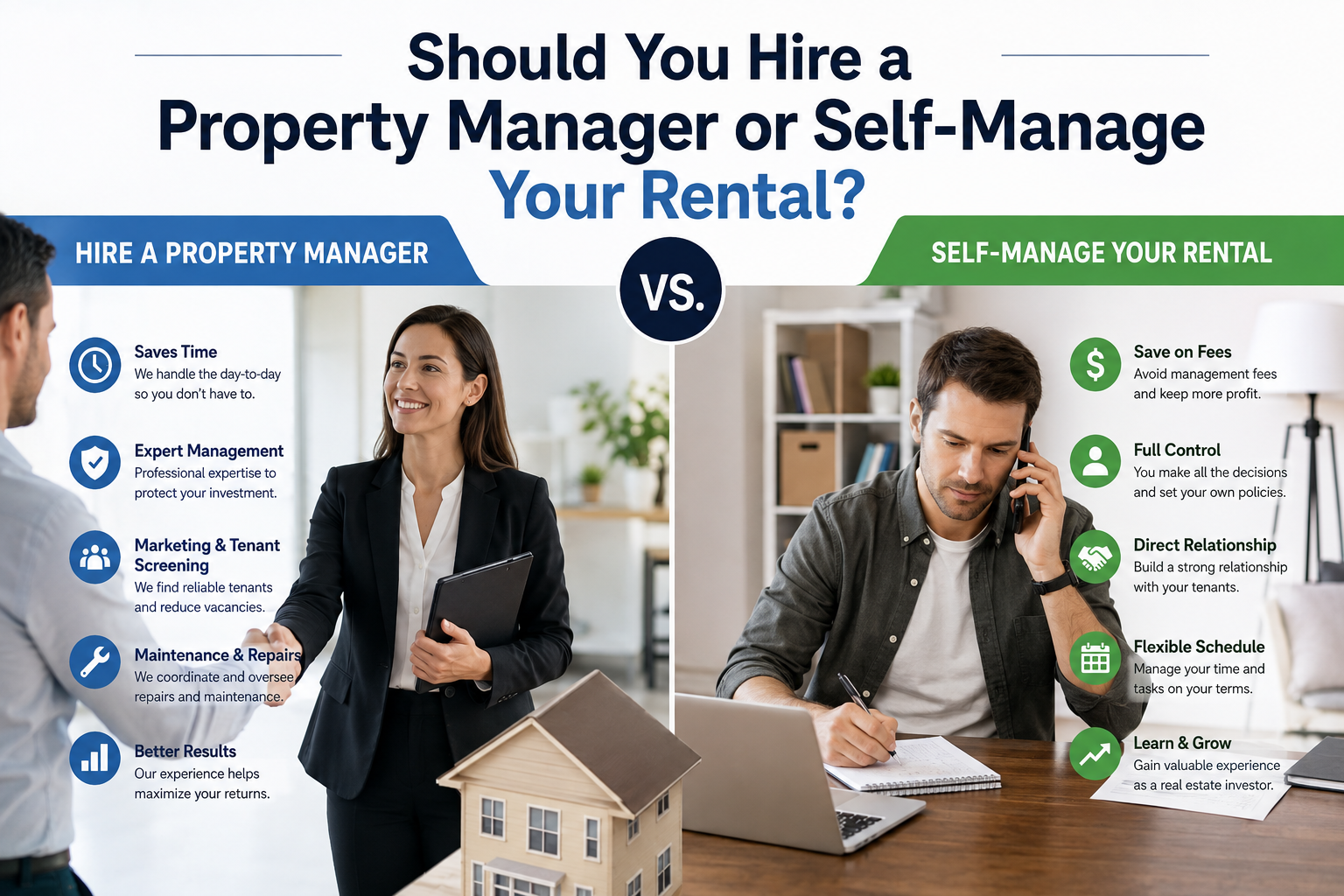
Hiring a property manager is worth it when management fees (typically 8-12% of monthly rent) cost less than your time, expertise gaps, or missed rent income from extended vacancies. Self-managing rental property makes financial sense for landlords with one to two local properties, available time, and maintenance knowledge. According to the National Association of Residential Property Managers (NARPM, 2024), professional management reduces vacancy rates by an average of 18% and tenant turnover by 25% compared to self-managed properties.
What You Get: Property Management Services vs. Self-Management Responsibilities
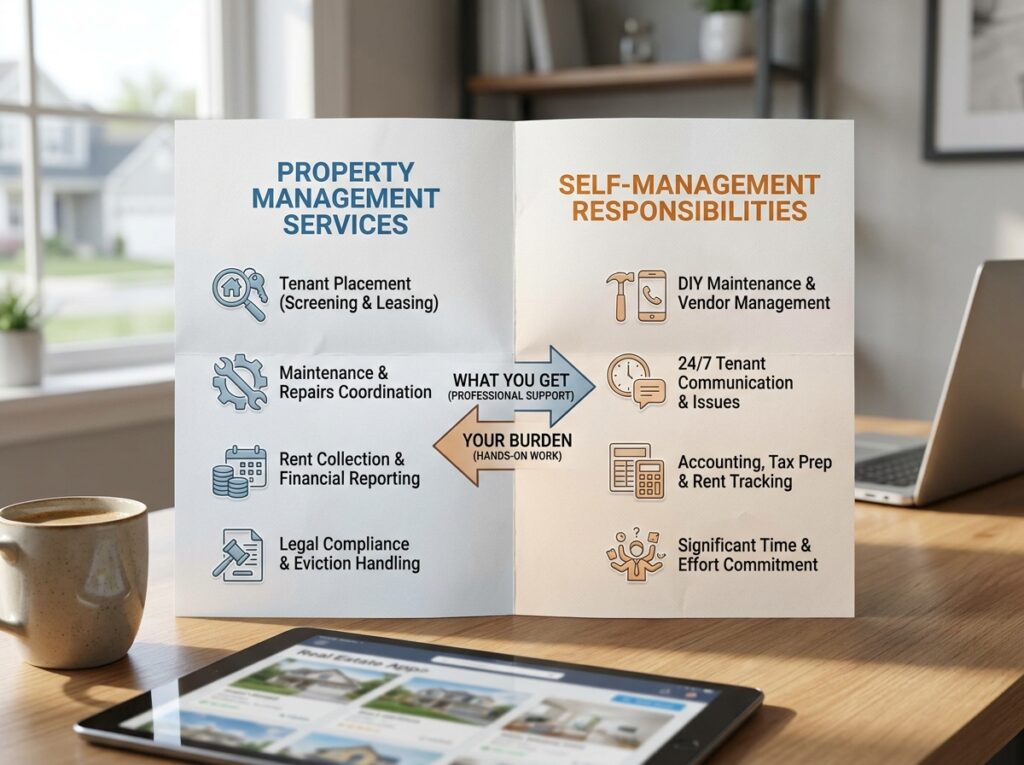
A property management company handles tenant screening, rent collection, maintenance requests, lease administration, and eviction process management. Professional property managers conduct background checks, credit checks, and verify rental applications according to Fair Housing Act requirements. They coordinate emergency repairs, schedule property inspections, and maintain detailed accounting records.
Self-managing landlords perform all landlord responsibilities themselves: marketing vacant units, showing properties, screening tenants, collecting security deposits, responding to maintenance requests, and enforcing lease agreements. DIY property management requires knowledge of landlord-tenant law, rental laws, and local occupancy permit requirements. Self-managing landlords must secure liability insurance and maintain property management software for rental operations.
Standard Property Manager Services Include:
- Tenant placement with comprehensive screening process (criminal, credit, employment verification)
- Rent collection services with automated payment systems
- 24/7 emergency repair coordination
- Property maintenance scheduling and vendor management
- Lease agreement preparation and renewal negotiations
- Rent increase implementation based on rental market analysis
- Eviction process handling when necessary
- Regular property inspection reports
- Financial reporting and tax documentation
Self-Management Landlord Duties:
- Advertising rental property on listing platforms
- Conducting property showings and tenant screening
- Managing lease administration and rental agreements
- Collecting rental income and tracking operating expenses
- Coordinating property upkeep and repair costs
- Handling tenant relations and maintenance requests
- Ensuring compliance with HOA rules and rental license requirements
- Managing accounting software for rental property operations
Cost Breakdown: Property Management Fees vs. Self-Management Expenses
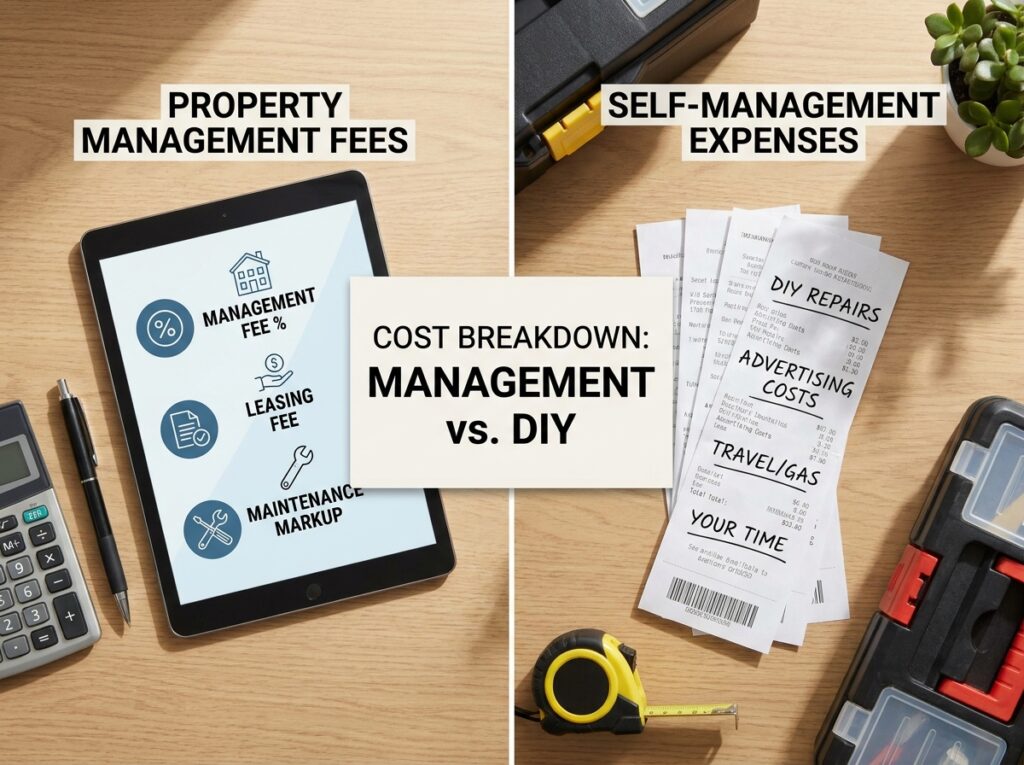
Property management costs typically range from 8-12% of monthly rental income, according to industry data from 2024. A rental property generating $2,000 monthly rent incurs $160-$240 in management fees. Additional leasing agent fees of 50-100% of one month’s rent apply for tenant placement services.
| Cost Component | Professional Management | Self-Management |
|---|---|---|
| Monthly Management Fee | 8-12% of rent ($160-$240 on $2,000 rent) | $0 |
| Tenant Placement | 50-100% of monthly rent ($1,000-$2,000) | $50-$150 (advertising, background checks) |
| Property Management Software | Included | $10-$100/month (Buildium, AppFolio, TurboTenant) |
| Maintenance Markup | 10-20% on repairs | Direct contractor costs |
| Time Investment | Minimal (1-2 hours/month) | 8-15 hours/month per property |
Self-management tools like Cozy, Zillow Rental Manager, and TurboTenant cost $10-$100 monthly. Landlords save management fee percentages but absorb time costs valued at $50-$150 per hour for professionals. The cost benefit analysis property manager comparison shows break-even occurs when saved time exceeds management fees.
Expected Benefits & ROI Analysis
Professional property management generates ROI through reduced vacancy rates, higher-quality tenant selection, and streamlined maintenance coordination. Properties managed by companies experience 12-18% lower vacancy rates than self-managed rentals, according to 2024 rental market data. This translates to $2,400-$4,320 additional annual income on a $2,000/month rental property.
Financial Benefits of Property Managers:
- Faster tenant placement (average 15-20 days vs. 30-45 days for self-management)
- Lower tenant turnover reducing placement costs
- Professional rent collection improving cash flow consistency
- Preventive property maintenance reducing major repair costs
- Tax deduction for management fees as operating expenses
- Legal compliance reducing liability risks
Self-Management Benefits:
- Direct control over tenant selection and property decisions
- Immediate response to tenant coordination needs
- Personal relationship with tenants improving retention
- Lower operating expenses increasing net rental income
- Hands-on investment property oversight building expertise
- Full retention of rental income minus direct costs
Real estate investors with strong tenant screening processes and maintenance networks can achieve similar results through self-managing rental property while working full time. However, the time commitment for self-managing rentals averages 8-15 hours monthly per property for experienced landlords.
Who Should Hire a Property Manager vs. Self-Manage
Hire a Property Manager When You:
- Own three or more investment properties requiring significant rental oversight
- Live more than 50 miles from your rental property location
- Lack experience with tenant management and landlord-tenant law
- Work full-time with limited availability for landlord tasks
- Value time savings over management fee structure costs
- Own vacation rentals requiring intensive rental coordination
- Have difficulty handling eviction process requirements
- Prefer professional property administration over DIY landlord responsibilities
Self-Manage When You:
- Own one to two local properties within 30 minutes’ drive
- Have maintenance knowledge and contractor relationships
- Can respond to emergency repairs within 24 hours
- Understand rental laws and Fair Housing Act compliance
- Enjoy hands-on property stewardship and tenant services
- Have flexible schedule accommodating rental property workload
- Want to maximize cash flow through landlord workload reduction elsewhere
According to a 2024 landlord survey, 67% of beginner landlords who hire property managers for first investment properties report higher satisfaction than those attempting self-management without experience. The question “do I need a property manager for one rental” depends on proximity, time availability, and skill level.
Alternatives to Consider
Hybrid property management solutions combine professional services with self-management cost savings. Leasing agents handle only tenant placement (typical fee: one month’s rent) while landlords manage ongoing rental operations. This approach works well when screening process expertise matters more than day-to-day property handling.
Property management software alternatives like Buildium, AppFolio, and TurboTenant provide professional-grade tools for $50-$100 monthly. These platforms automate rent collection, maintenance scheduling, and financial reporting while landlords retain property control. For those comparing property manager vs self-managing, hybrid models offer middle-ground solutions.
Alternative Management Strategies:
- Leasing agent only for tenant placement services
- Part-time property supervisor for local oversight
- Property management software for rental administration automation
- Co-management with property owner handling specific tasks
- Seasonal management for vacation rental properties
Final Verdict: Decision Framework
Hiring a property manager is worth the 8-12% management fee when time savings, reduced vacancy rates, and professional tenant screening outweigh costs. For a $2,000/month rental, annual management fees of $1,920-$2,880 deliver value when they prevent one month’s vacancy ($2,000) or problematic tenant placement.
Self-managing rental property makes financial sense for landlords with local properties, available time, and property management knowledge. The break-even point typically occurs at three to four properties when management complexity justifies professional property oversight.
The property management worth cost calculation depends on your property value, rental market conditions, and personal circumstances. Properties with higher rental income justify management fees more easily. Out-of-state rentals virtually require professional management due to distance challenges.
Start with self-management for your first local rental to build landlord experience, then hire property manager as your portfolio grows beyond comfortable management capacity. This phased approach balances learning opportunities with practical rental property time investment limitations while maintaining optimal property supervision and rental care standards.
If the framework points toward hiring help, here is how our Indianapolis property management team handles leasing, maintenance and accounting.