
What Is an Indiana Lease Agreement? Essential Legal Requirements for Rental Contracts
An Indiana lease agreement is a legally binding residential tenancy contract between a landlord and tenant that establishes the terms and conditions for occupying a rental property. According to Indiana Code Title 32, Article 31, this leasing document must clearly specify rental terms, payment obligations, and the rights and responsibilities of both parties throughout the lease duration.
Why Indiana Lease Agreements Matter for Rental Property
A comprehensive rental contract protects both landlords and tenants by establishing clear expectations and legal recourse. The Indiana landlord-tenant law requires specific lease provisions to ensure enforceability in court. Without a properly structured housing agreement, disputes over security deposit returns, property damage, or eviction process become significantly more complex to resolve.
Key Characteristics of Valid Indiana Rental Agreements
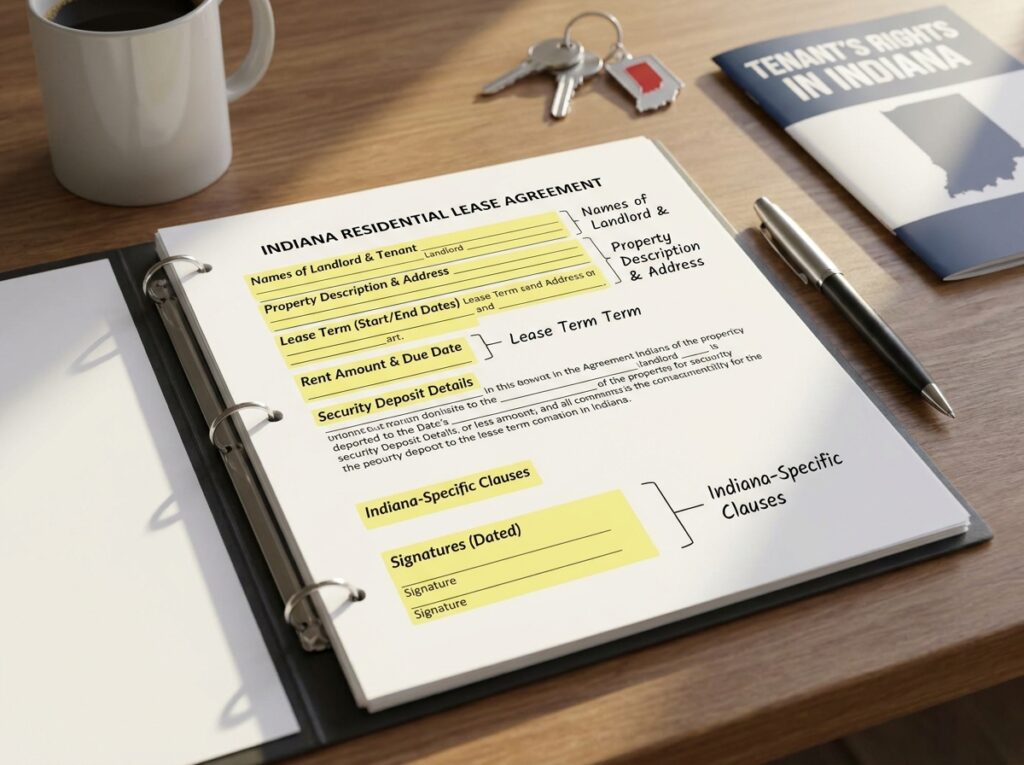
Indiana residential lease agreements share five essential characteristics that distinguish them as legally enforceable tenancy agreements:
- Written Documentation: While oral leases under one year are technically valid, written lease agreements provide superior legal protection and clarity for both parties.
- Mutual Consent: Both landlord and tenant must voluntarily agree to all lease terms and conditions before signing the binding lease contract.
- Legal Compliance: The rental contract must comply with Indiana rental laws, fair housing laws, and federal regulations including lead paint disclosure requirements for properties built before 1978.
- Clear Consideration: The lease must specify rent amount, due date, and payment method in exchange for occupancy rights to the rental unit.
- Lawful Purpose: The property agreement must be for legitimate residential purposes and cannot violate local zoning ordinances or housing codes.
Required Components of Indiana Lease Agreement
Understanding Indiana lease agreement requirements ensures compliance with state law and prevents costly legal disputes. Every complete Indiana lease agreement template must include these mandatory lease provisions:
1. Party Identification and Property Details
The lease documentation must identify all parties by full legal names and current addresses. The property address must include the complete street address, unit number (for apartment lease agreements), city, county, and ZIP code. For multi-family lease situations, specify which rental unit the tenant will occupy and whether common areas are included.
2. Lease Term and Duration Specifications
Indiana lease agreements require explicit move-in date and move-out date specifications. Fixed-term lease agreements typically span 12 months, while month-to-month lease arrangements renew automatically. The lease duration section should state whether the tenancy agreement converts to month-to-month after the initial term expires or requires a formal lease renewal process.
3. Financial Terms and Rental Payment Provisions
The rental contract must specify monthly rent amounts in both numerical and written form. Include the exact due date (typically the first of each month), accepted rental payment methods, and any grace period before late fees apply. Indiana law does not cap late fees, but they must be reasonable. Most standard lease agreements charge $25-$50 or 5-10% of monthly rent for late payment fees.
4. Security Deposit Clause and Indiana Legal Limits
According to Indiana security deposit laws as of 2025, landlords may charge any amount but must return deposits within 45 days after the tenant vacates. The security deposit laws Indiana section must explain the deposit return timeline, conditions for withholding amounts, and the itemized statement requirement. The clause should distinguish between normal wear and tear (landlord’s responsibility) and property damage (tenant’s financial responsibility).
5. Utilities and Maintenance Responsibilities
The lease specifications must clearly delineate which utilities the tenant pays versus those included in rent. Common landlord responsibilities include structural repairs, HVAC system maintenance, and ensuring habitability standards. Tenant obligations typically cover minor repairs, lightbulb replacement, and keeping the dwelling lease clean and sanitary.
6. Property Maintenance and Repair Request Procedures
Indiana lease agreement maintenance clauses should establish procedures for submitting repair requests and emergency contact information. The landlord agreement must specify response timeframes for urgent issues (24 hours) versus non-emergency maintenance requests (typically 7-14 days). Include protocols for move-in inspection and move-out inspection to document property condition.
7. Occupancy Limits and Guest Policy
The occupancy agreement must specify maximum occupants permitted under local housing codes and lease terms. Indiana lease agreement guest policy sections typically allow visitors for up to 7-14 consecutive days before requiring landlord approval or lease modification.
8. Pet Policy and Smoking Restrictions
If allowing pets, the Indiana lease agreement pet policy section should specify animal types, size limits, quantity restrictions, and any additional pet deposit or monthly pet rent. The smoking policy must clearly state whether the rental housing is smoke-free or designates specific smoking areas.
9. Subletting and Assignment Clauses
Most Indiana residential lease forms prohibit subletting without written landlord consent. The lease agreement subletting clause should outline the approval process and whether subletting is categorically prohibited or permitted with conditions.
10. Termination and Renewal Provisions
The notice period for month-to-month tenancies in Indiana requires 30-day notice from either party. Fixed-term leases should specify lease renewal terms and whether a 60-day notice is required for non-renewal. The Indiana lease agreement early termination section must outline penalties, acceptable reasons for breaking the lease, and procedures for finding replacement tenants.
11. Entry Rights and Privacy Protections
Indiana law requires reasonable notice (typically 24-48 hours) before landlord entry except for emergencies. The Indiana lease agreement entry rights clause should specify acceptable entry reasons including property inspection, maintenance, showing to prospective tenants, and emergency situations.
12. Legal Disclosures and Compliance
The Indiana lease agreement disclosure requirements include lead paint warnings for pre-1978 properties, known environmental hazards, and any planned major renovations. Some municipalities require additional disclosures about bed bugs, crime statistics, or flood zones.
Indiana Lease Agreement vs Month-to-Month Rental Agreement
Unlike fixed-term lease agreements that lock in rental conditions for a specific lease period, month-to-month lease arrangements offer flexibility but less stability. A year lease protects tenants from rent increases and protects landlords from frequent turnover costs. Month-to-month agreements allow either party to terminate with 30-day notice but offer less predictability for financial planning.
Common Misconceptions About Indiana Rental Contracts
Myth: Oral lease agreements are completely unenforceable in Indiana.
Reality: Indiana recognizes oral leases for terms under one year, but written lease documentation provides far superior legal protection and evidentiary value during disputes.
Myth: Indiana limits security deposits to one month’s rent.
Reality: Indiana does not cap deposit amounts, though landlords must return deposits within 45 days with an itemized statement explaining any deductions.
Myth: Landlords can enter rental units anytime without notice.
Reality: Indiana landlords must provide reasonable notice (typically 24-48 hours) except during genuine emergencies threatening property or safety.
Practical Applications: Creating Compliant Indiana Lease Agreements
Landlords should follow this Indiana lease agreement checklist when drafting rental contracts:
- Download a comprehensive Indiana lease template or consult an attorney for customization
- Verify all mandatory lease provisions meet current Indiana rental laws as of 2025
- Include specific property rules regarding noise restrictions, parking provisions, and common area usage
- Add optional lease terms like automatic renewal clauses or lease extension procedures
- Attach any lease addendum forms addressing pets, smoking, or special conditions
- Ensure both parties receive signed copies of the complete rental documentation
- Keep enforceable lease copies for the entire tenancy period plus three years
A well-structured Indiana rental agreement template protects both parties, prevents misunderstandings, and provides clear guidelines for the entire landlord-tenant relationship. Whether managing a single-family lease, apartment rental agreement, or condo rental agreement, comprehensive lease components establish the foundation for successful property tenancy throughout the rental period and beyond.